
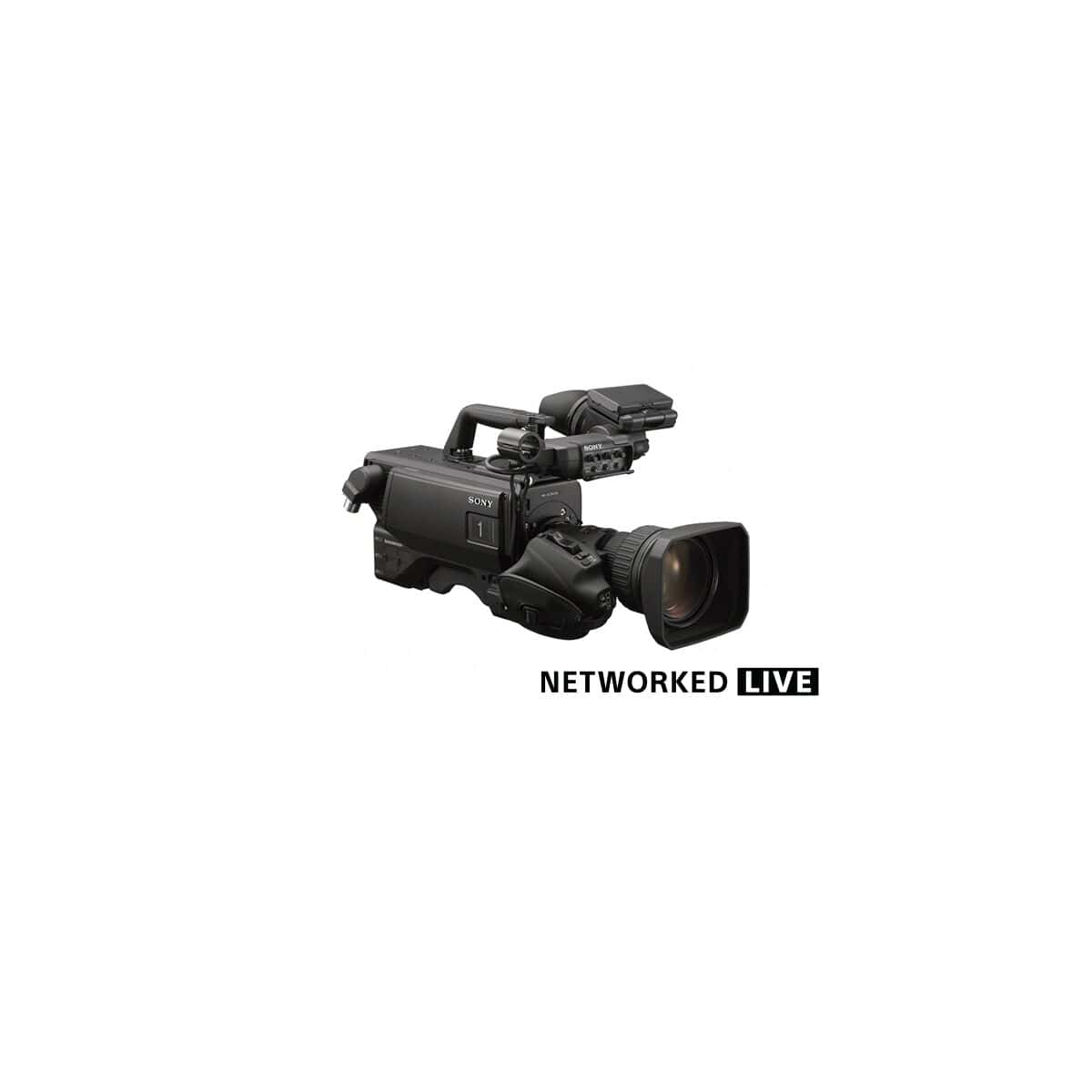
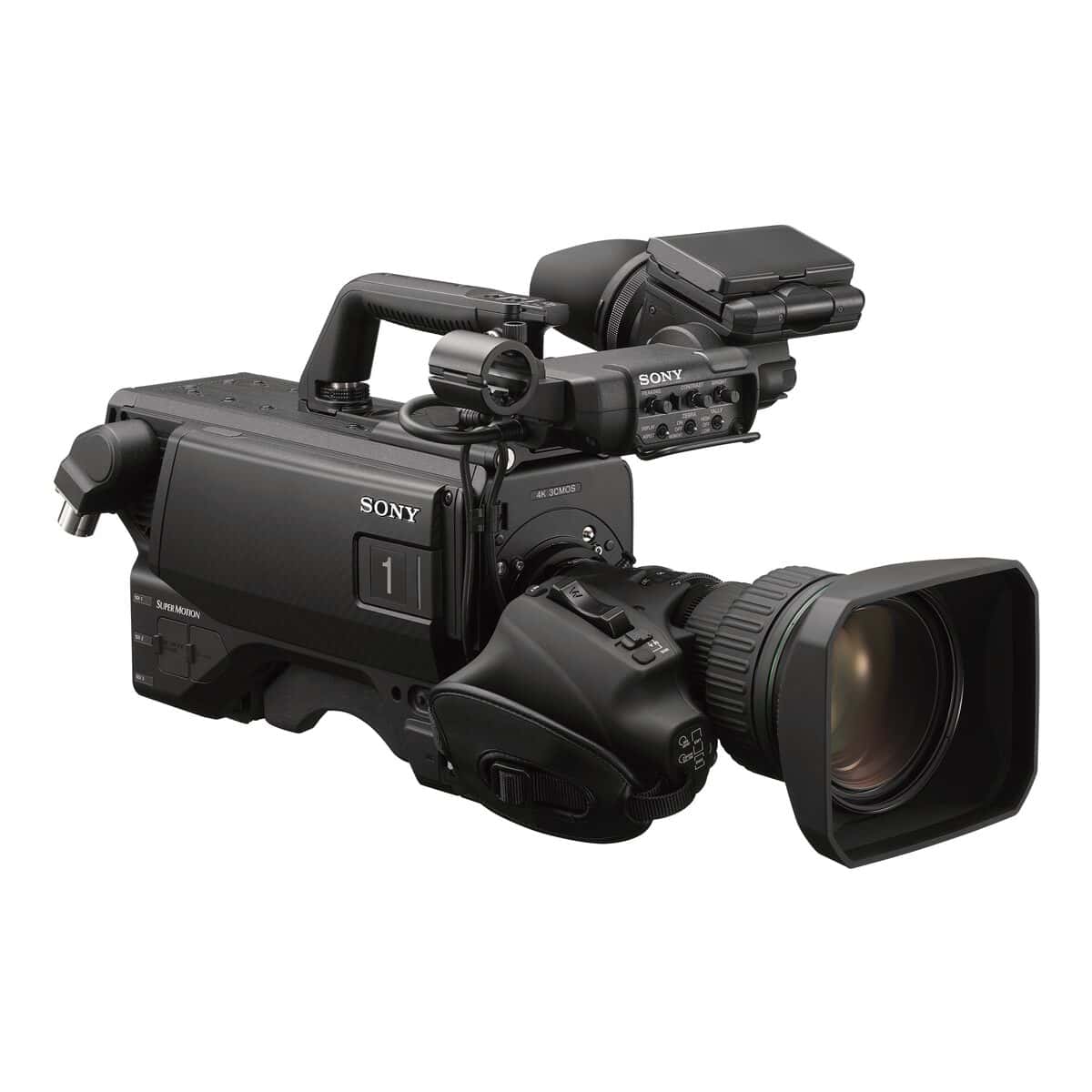
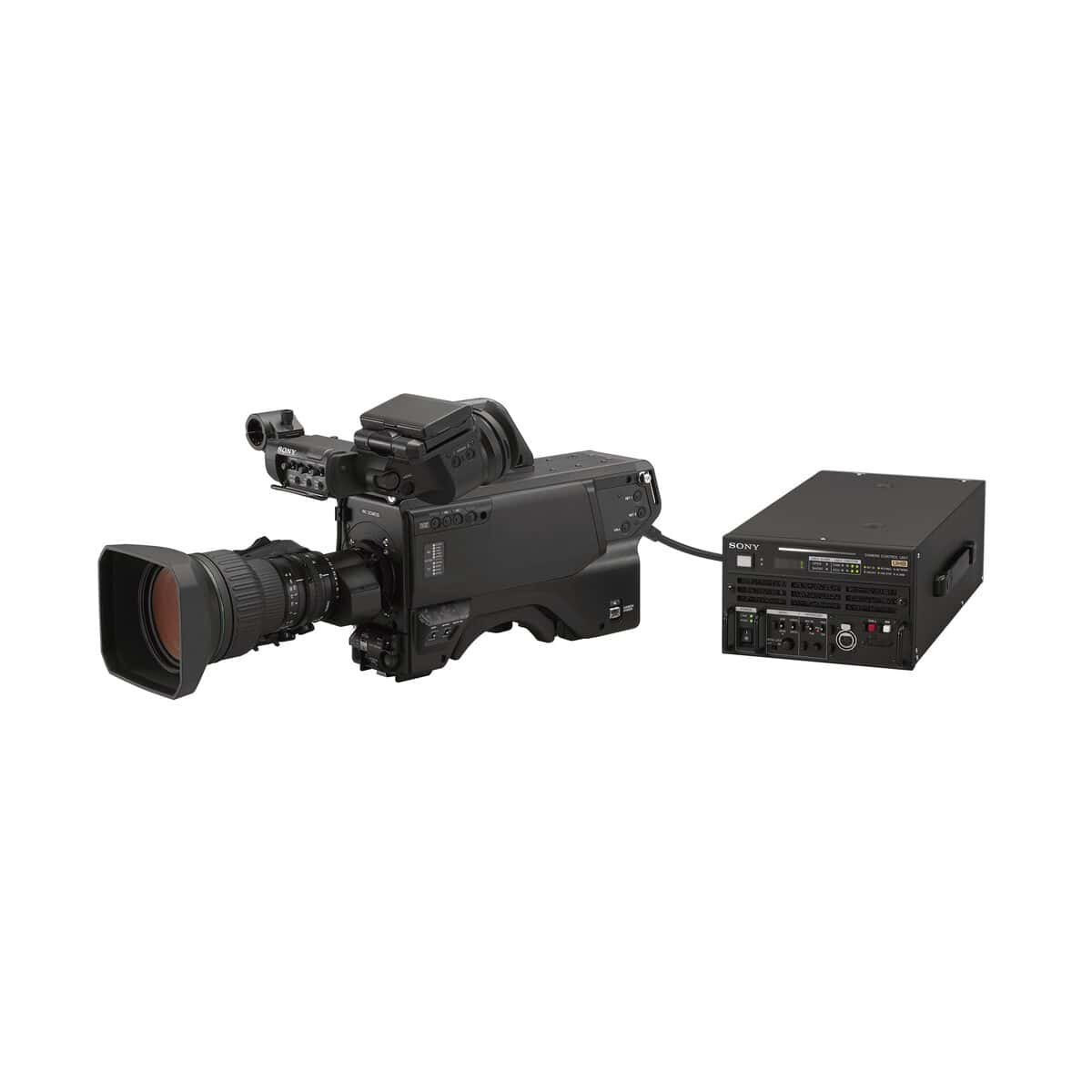
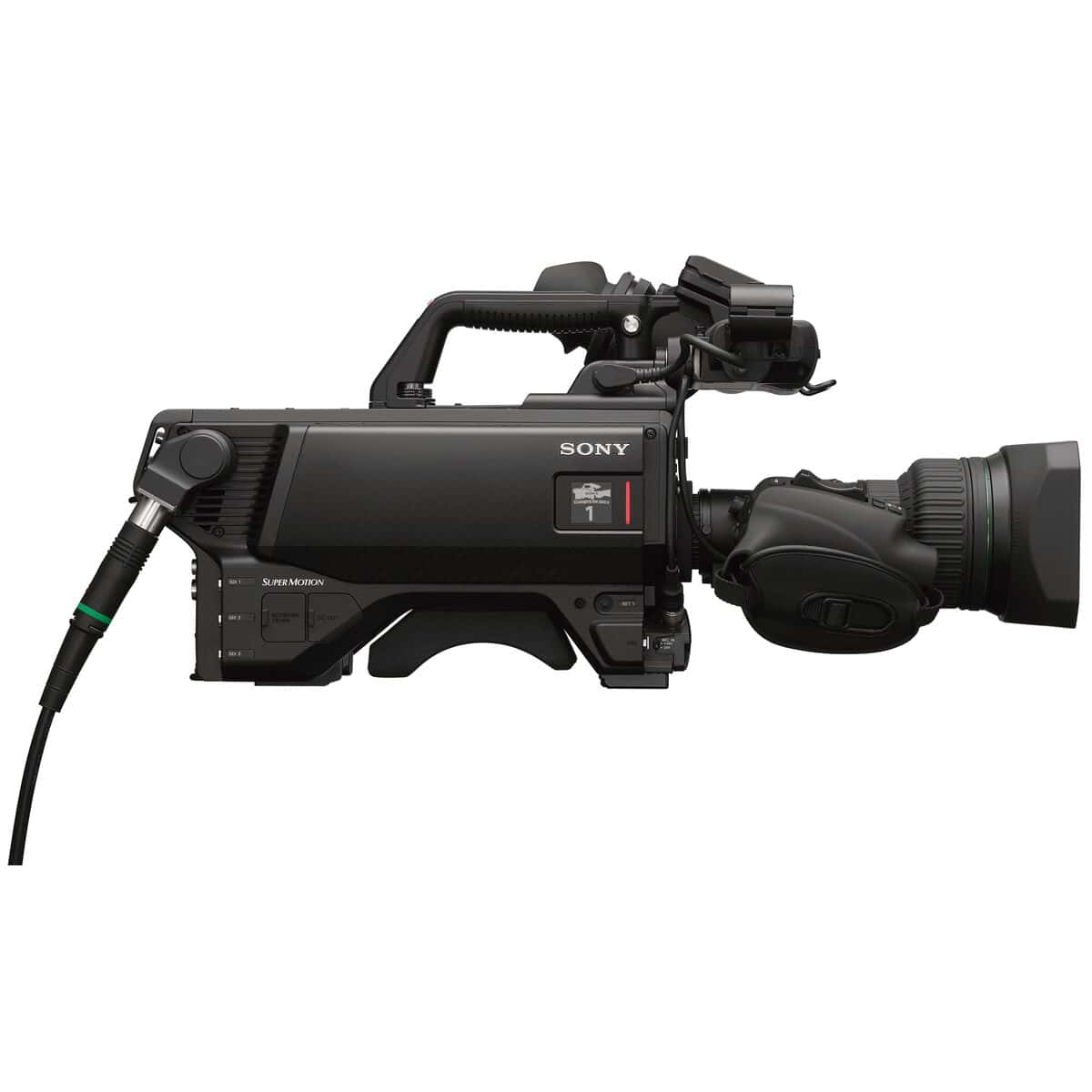
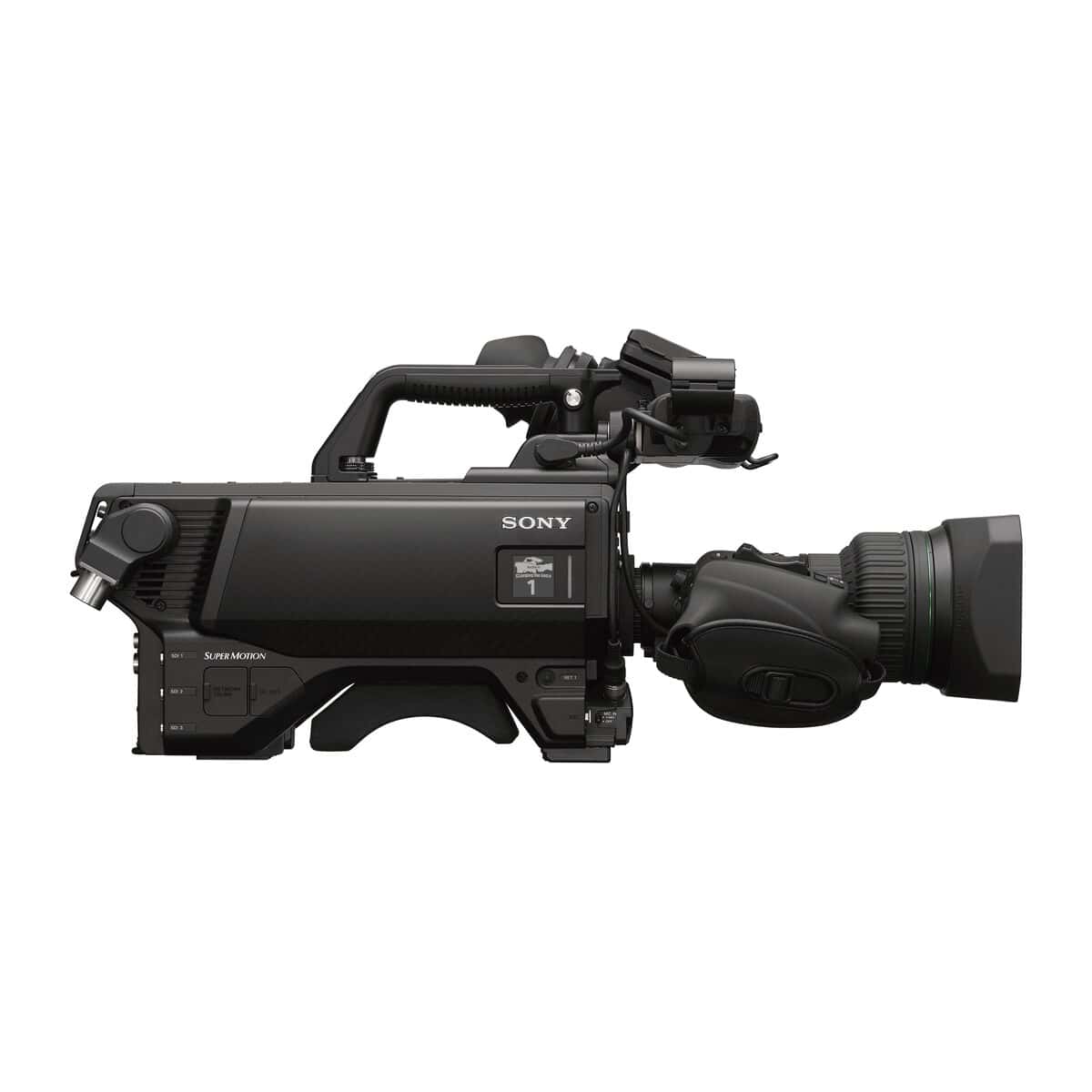
Discover Sony’s HDC‑5500, a 4K system camera delivering high frame‑rate performance, wide dynamic range, and reliable operation for live broadcast production.
Key features
- Easy transmission change — The HDC-5500 supports optical fibre transmission as standard with ultra high bitrate (UHB) transmission. With an optional side panel, HDC-5500 is compatible with HDCU-3500/3100/2000 series Camera Control Units. It is quick and easy to reconfigure the camera at any time – for fibre, third-generation digital triax or wireless operation – with a choice of optional outside panels.
- Wider workflow options — Combining exceptional lightness and strength, the magnesium alloy body is complemented by carbon fibre reinforced plastic (CFRP) outside panels. Sure, stable handling is enhanced by the camera’s low centre of gravity, easily adjustable shoulder pad and widened hand grip area. Also ideal for handheld operation, HDC series studio cameras offer exceptional user ergonomics in a wide range of studio and field-based production environments.
- The go anywhere camera — Combining exceptional lightness and strength, the magnesium alloy body is complemented by carbon fibre reinforced plastic (CFRP) outside panels. Sure, stable handling is enhanced by the camera’s low centre of gravity, easily adjustable shoulder pad and widened hand grip area. Also ideal for handheld operation, HDC series studio cameras offer exceptional user ergonomics in a wide range of studio and field-based production environments.
- Seamless integration — Backwards compatibility with Sony’s industry-acclaimed HDC-2000 series system cameras simplifies smooth integration with your current live production infrastructures, including cameras and CCUs.
- Multi-speed slo-motion acquisition — Adding an optional license enables high frame-rate (HFR) HD image capture at 8x, 6x, 4x, 3x, and 2x. Simultaneous capture of high dynamic range (HDR) images allows simultaneous production of HDR and SDR at an SR-Live event.
- Virtual Production Made Simple — Virtual production combines real sets and props with virtual backgrounds, enabling limitless environments and innovative forms of expression. Global shutter cameras are an ideal choice for shooting against LED display walls. The virtual production toolset, including virtual HDC cameras, facilitates simulations, enhances shooting efficiency, and expands opportunities for effortless and unrestricted creative expression.
- ARIA: Automatic Restoration of Illumination Attenuation — F drop and peripheral light loss are unwanted physical phenomena especially in long-distance object shooting. Thanks to the newly developed ARIA function of HDC series, the impact on picture appearance is automatically compensated for by processing inside the camera for the supported lens*. * Contact your Sony sales office or representative for details
- Display camera number and tally — Assigned camera number is indicated on the camera body by a graphical electronic paper display. Displayed information is updated automatically to reflect system changes. There’s also an LED tally lamp beside the camera number display.
- Rich focus assist functions — The Viewfinder Detail function adds dedicated image-enhancing edge signals directly to the viewfinder, helping the operator to focus quickly and precisely in any shooting situation. It’s complemented by a Focus Assist Indicator and advanced Focus Position Meter function.
- Servo controlled ND and CC filters — Dual optical filter wheels for Neutral Density (ND) and Colour Correction (CC)* open up wider creative possibilities. Both filters can be controlled from a remote control panel, master setup unit, or directly from the camera head.
- Network TRUNK — Network TRUNK (via LAN port) allows high-speed data transmission between the camera and CCU at up to 1 Gbps to support configurability* with IP-based products and systems. * Camera operating in fibre configuration.
- Recording and real-time network transfer — With the recording option HKCU-REC55, the HDCU-5500 can record the live feed inside CCU. The file can be transfered to USB SSD or network storage in real-time during recording. Therefore, when the shooting operation is finished, the file is already transferred to portable SSD or NAS.